
Understanding the Modern Oil and Gas Trading Industry
The global oil and gas trading industry remains one of the most influential sectors in international commerce. As we move through 2026, energy markets continue to evolve due to technological innovation, changing regulations, geopolitical developments, and increasing demand for secure transaction structures.
For international buyers and suppliers, understanding how oil and gas trading works is essential for conducting successful cross-border transactions while minimizing financial risks. Whether trading crude oil, diesel, jet fuel, LNG, LPG, EN590, D6 fuel, or other petroleum products, participants must navigate complex procedures involving contracts, logistics, compliance, banking instruments, and trade finance solutions.
This guide explains the complete oil and gas trading process in 2026 and highlights the role of financial instruments such as Bank Guarantees (BG) and Standby Letters of Credit (SBLC) in securing international energy transactions.
What is Oil and Gas Trading?
Oil and gas trading refers to the buying and selling of petroleum and energy products between producers, suppliers, traders, distributors, and end buyers across global markets.
The process typically involves:
• Product sourcing
• Price negotiations
• Contract execution
• Financial verification
• Shipment and logistics
• Inspection procedures
• Payment settlement
• Delivery completion
Major products traded internationally include:
• EN590 Diesel
• Jet Fuel A1
• LNG (Liquefied Natural Gas)
• LPG (Liquefied Petroleum Gas)
• D6 Virgin Fuel Oil
• Gasoline and Petroleum Products
Digital trading platforms, blockchain verification systems, and enhanced banking compliance procedures have significantly improved transparency and efficiency throughout the supply chain.
Key Participants in Oil and Gas Trading
A successful oil and gas transaction involves several stakeholders working together.
Suppliers and Refineries: Suppliers include oil-producing companies, refineries, and authorized mandate holders capable of providing petroleum products for export.
Buyers can include:
• National oil companies
• Energy distributors
• Government agencies
• Aviation fuel suppliers
• Industrial manufacturers
• Wholesale petroleum importers
Traders and Intermediaries
Commodity traders facilitate transactions between buyers and sellers by sourcing products, negotiating contracts, and managing logistics.
Financial Institutions
Banks play a critical role by issuing financial instruments that protect both parties and guarantee contractual obligations.
Inspection Agencies
Independent inspection companies verify product quantity and quality before shipment and upon delivery.
Step-by-Step Oil and Gas Trading Process in 2026
1. Product Inquiry
The process begins when a buyer submits an official inquiry specifying:
• Product type
• Quantity required
• Destination port
• Delivery terms
• Contract duration
The supplier then evaluates availability and pricing.
2. Offer and Negotiation
The supplier provides a commercial offer detailing:
• Product specifications
• Pricing formula
• Delivery schedule
• Payment terms
• Contract conditions
Both parties negotiate until mutually acceptable terms are reached.
3. Contract Signing
Once negotiations conclude, the buyer and supplier execute a formal sales and purchase agreement (SPA).
The SPA typically outlines:
• Product specifications
• Quantity commitments
• Delivery schedule
• Inspection requirements
• Payment mechanisms
• Legal obligations
4. Financial Verification
Financial verification has become increasingly important in 2026.
Suppliers need assurance that buyers possess the financial capability to complete transactions, while buyers require confidence that suppliers can fulfill delivery obligations.
This is where trade finance instruments become essential.
5. Shipment and Logistics
Following financial verification, suppliers arrange transportation through:
• Tankers
• Pipelines
• Storage terminals
• Port facilities
Modern logistics technologies provide real-time cargo tracking, enhancing visibility throughout the shipment process.
6. Product Inspection
Independent inspection agencies verify:
• Product quality
• Quantity
• Compliance with contract specifications
Inspection certificates help reduce disputes and provide confidence to all parties involved.
7. Payment Settlement
Upon successful inspection and shipment confirmation, payment is processed according to contractual terms.
Secure financial instruments help ensure smooth and timely settlement.
The Importance of BG and SBLC in Oil and Gas Transactions
One of the most significant developments in modern oil and gas trading is the increasing reliance on structured trade finance solutions.
What is a Bank Guarantee (BG)?
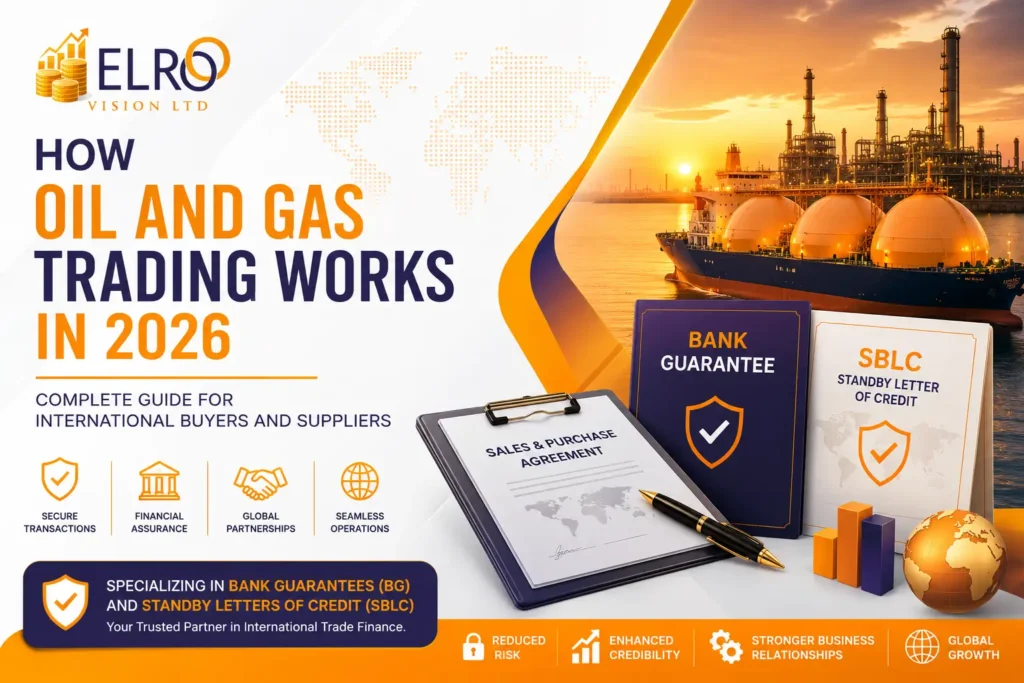
A Bank Guarantee (BG) is a financial commitment issued by a bank that assures a beneficiary that contractual obligations will be fulfilled.
In oil and gas trading, a BG provides suppliers with confidence that buyers can meet payment obligations.
Benefits include:
• Reduced transaction risk
• Enhanced credibility
• Improved supplier confidence
• Access to larger contracts
• Stronger international business relationships
What is a Standby Letter of Credit (SBLC)?
A Standby Letter of Credit (SBLC) functions as a financial safety mechanism.
If one party fails to fulfill contractual obligations, the beneficiary may draw on the SBLC according to agreed terms.
SBLCs are widely accepted in international energy transactions because they provide:
• Payment security
• Financial assurance
• Greater flexibility
• Improved risk management
• Stronger transaction confidence
Why Financial Instruments Are Critical in 2026
International energy transactions often involve millions of dollars and multiple jurisdictions. Without proper financial safeguards, parties face risks such as:
• Non-payment
• Contract default
• Delivery failures
• Regulatory complications
• Counterparty risk
Banks and financial service providers help mitigate these risks through professionally structured BG and SBLC Finance solutions.
These instruments have become industry standards for many large-scale petroleum transactions.
How Elro Vision Ltd Supports International Oil and Gas Transactions
As international trade becomes increasingly complex, businesses require reliable financial partners that understand both global commerce and banking requirements.
Elro Vision Ltd is a leading provider of financial instruments, specializing in Bank Guarantees (BG) and Standby Letters of Credit (SBLC).
The company delivers tailored financial solutions that help businesses:
• Secure high-value transactions
• Improve credibility with suppliers
• Strengthen buyer confidence
• Facilitate international trade
• Support seamless commercial operations
• Reduce financial and contractual risks
By providing structured BG and SBLC solutions, Elro Vision Ltd enables buyers and suppliers to conduct transactions with greater security and efficiency.
Organizations involved in oil and gas trading often require dependable financial support to meet supplier requirements and unlock larger opportunities in global energy markets.
Emerging Trends in Oil and Gas Trading for 2026
Oil and gas trading remains a cornerstone of the global economy in 2026. While opportunities continue to expand, successful transactions require a strong understanding of market procedures, compliance requirements, logistics, and financial security mechanisms.
For international buyers and suppliers, structured trade finance solutions such as Bank Guarantees (BG) and Standby Letters of Credit (SBLC) have become essential tools for managing risk and building trust.
As a trusted provider of Bank Guarantee and SBLC solutions, Elro Vision Ltd helps businesses navigate complex international transactions with confidence, security, and professionalism. By combining financial expertise with tailored solutions, the company continues to support organizations seeking reliable and efficient pathways to success in the global oil and gas trading industry.
For businesses looking to strengthen their international trading capabilities, secure transactions, and expand opportunities in the energy sector, partnering with experienced financial instrument providers can be a critical competitive advantage.